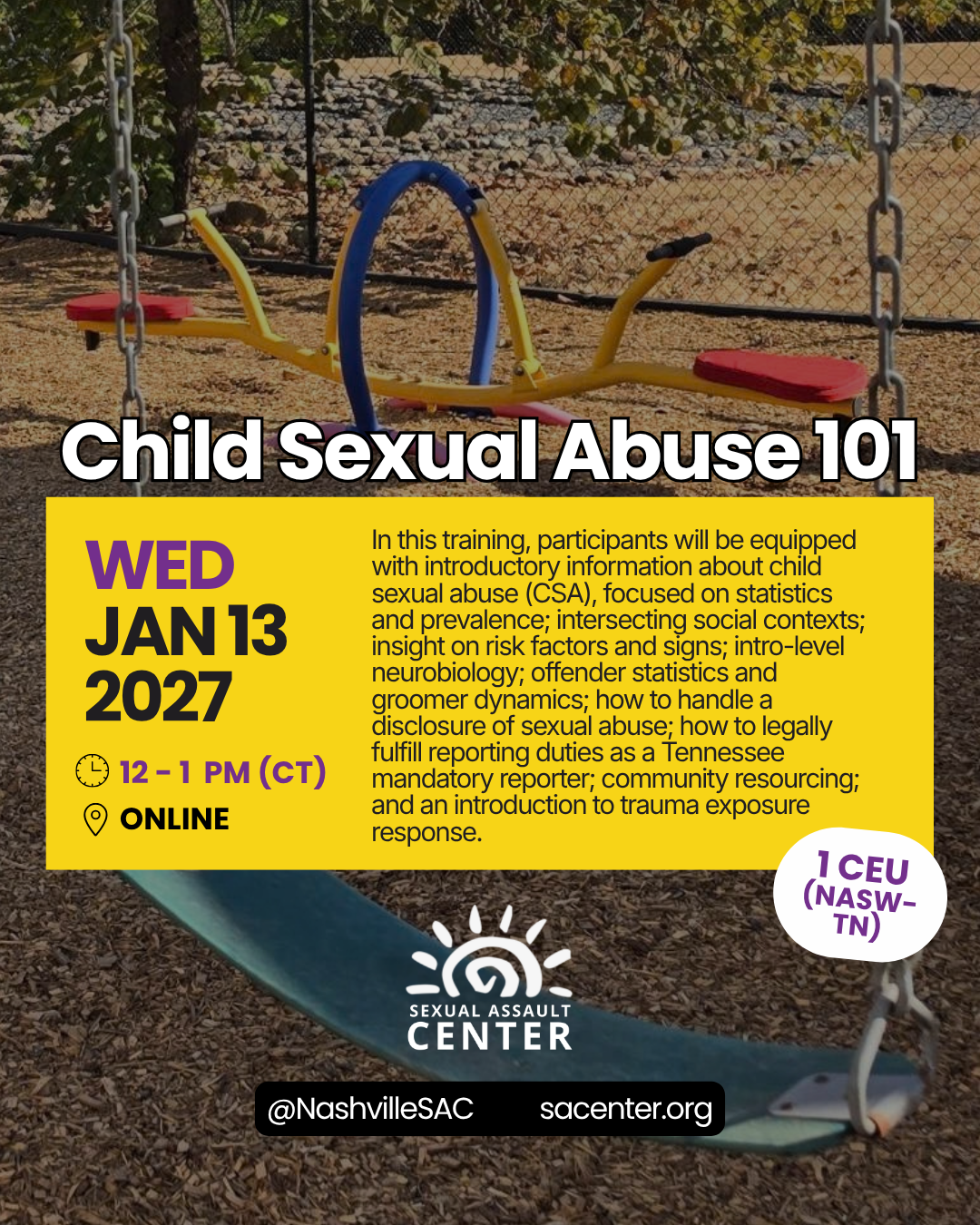
Child Sexual Abuse 101 (2 CEUs available)
In this online training, participants will be equipped with introductory information about child sexual abuse (CSA), focused on statistics and prevalence; intersecting social contexts; insight on risk factors and signs; intro-level neurobiology; offender statistics and groomer dynamics; how to handle a disclosure of sexual abuse; how to legally fulfill reporting duties as a Tennessee mandatory reporter; community resourcing; and an introduction to trauma exposure response.
We offer NASW-TN CEUs.
Click here for more information.PTSD, SUD, and Those Who Care is a 90-minute educational and supportive training designed for secondary victims, family members, and loved ones of individuals impacted by sexual abuse, trauma and substance use. This training focuses on helping participants better understand the intersection of Post-Traumatic Stress Disorder (PTSD) and Substance Use Disorder (SUD), and how these experiences can shape behaviors, coping strategies, and relationships.
Facilitated by experienced advocates Josh Johnson (SAC) and Riley Skyles (Avalon Center), the training provides a trauma-informed overview of how sexual violence–related trauma and substance use often coexist, and why healing can be complex and non-linear. Participants will gain insight into common trauma responses, substance use as a coping mechanism, and the emotional toll this intersection can have on families and support systems.
Click here for more information.Are you looking for a way get more involved in our community? Join us for the Quarterly Volunteer Day in April!
Date: Saturday, April 18, 2026
Time: 9:00 AM - 1:00 PM
Location: 101 French Landing Drive
Indoor Support: bit.ly/VolDay26
Outdoor & Garden Support: bit.ly/VolGarden26
Faith communities are places of trust, care, and healing. They also play a vital role in prevention, accountability, and survivor support. Join us for a one-day, trauma-informed symposium bringing together faith leaders, advocates, and community partners for a courageous conversation on responding to and preventing sexual violence.
Participants will explore trauma-informed responses to disclosure, power dynamics and accountability, prevention practices rooted in faith values, and practical tools to support survivors with compassion and integrity.
Friday, May 1 | 9:00 a.m. – 3:00 p.m.
Carmichael College Multipurpose Room, Vanderbilt University (2321 West End Ave)
NEW DATE!
Join us virtually on May 27th - 29th for three days of free workshops! From therapy rooms to courtrooms, creating diverse survivor-centered systems that heal, not harm.
Hosted by the Statewide Training Team at the Sexual Assault Center, this annual conference is designed to amplify the voices and wisdom of experts working on the front lines of caring for sexual assault survivors. Our target audience includes clinicians, advocates, educators, first responders, and school-based professionals – anyone playing a role on the front line of supporting survivors and fostering healing.
CEUs available upon request.
Click here for more information.Sexual Development 0-18: Behaviors, Identity, and Trauma (2 CEUs available)
This online training explores the dynamics of childhood sexual development from ages 0 – 18. We will discuss how traumatic experiences can “flip the switch” and influence sexual development resulting in experiences and behaviors that are commonly misunderstood by professionals working with survivors of childhood sexual abuse.
NASW-TN CEUs and attendance certificates available upon request.
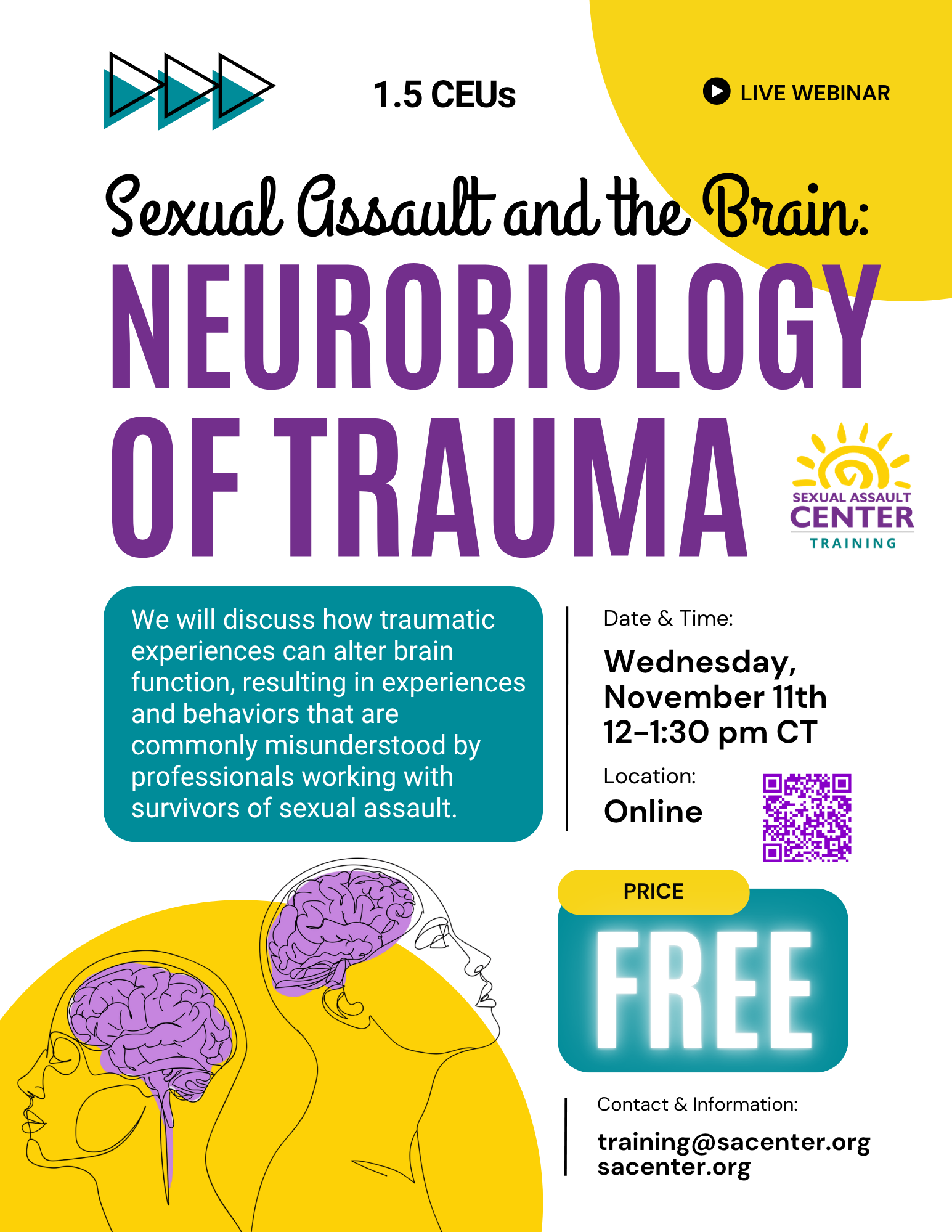
Click here for more information.Sexual Assault & The Brain: The Neurobiology of Trauma (1.5 CEUs available)
The physiological components of trauma, including neurobiology and nervous system dysregulation, are the main focus of this training. We will discuss how traumatic experiences can alter brain function, resulting in experiences and behaviors that are commonly misunderstood by professionals working with survivors of sexual assault. Participants will leave with an understanding of brain development and functioning as it relates to sexual assault as well as common, involuntary responses to sexual assault, and how to apply these concepts to increase safety and care for survivors.
Click here for more information.